 |
| simple pvc coqui trap |
Many of our friends here on the Big Island of Hawaii, and
the district of PUNA in particular, remember when you did NOT hear the
perturbing sounds of the infamous COQUI frogs all night long.
LISTEN TO COQUI As you listen to this short video, imagine this sound multiplied 1000x – then maybe you won’t think it is so cute. At our house, we have tried to keep most of the vegetation away from the house, but if a few of these little buggers are near your bedroom window – you have to use earplugs.
 Yes, if you are visitor, there is some
enchantment, but most of us locals find them annoying. At least we know when the temperature falls to 60 degrees because they are quiet.
Yes, if you are visitor, there is some
enchantment, but most of us locals find them annoying. At least we know when the temperature falls to 60 degrees because they are quiet.
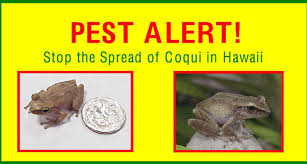
Apparently this invasive species arrived in Hawaii from Puerto Rico in 1988. While Puerto Rico residents seem to adore them as their mascot; here, however, they have a negative impact by eating many of the insects that would be consumed by the insectivore birds that are actually native to the island. If they keep growing in numbers, they may contribute to the decline of local native species.
LISTEN TO COQUI As you listen to this short video, imagine this sound multiplied 1000x – then maybe you won’t think it is so cute. At our house, we have tried to keep most of the vegetation away from the house, but if a few of these little buggers are near your bedroom window – you have to use earplugs.
Apparently this invasive species arrived in Hawaii from Puerto Rico in 1988. While Puerto Rico residents seem to adore them as their mascot; here, however, they have a negative impact by eating many of the insects that would be consumed by the insectivore birds that are actually native to the island. If they keep growing in numbers, they may contribute to the decline of local native species.
 |
| Our neighbor's nightly catch |
Our main goal is to catch as many as we can (especially close to the house) using this simple technique (offered by UH) and our next door neighbor. They can be killed by freezing, very hot water, or citric juice.


